George Crum: The Black Chef Behind One of America’s Most Iconic Snacks

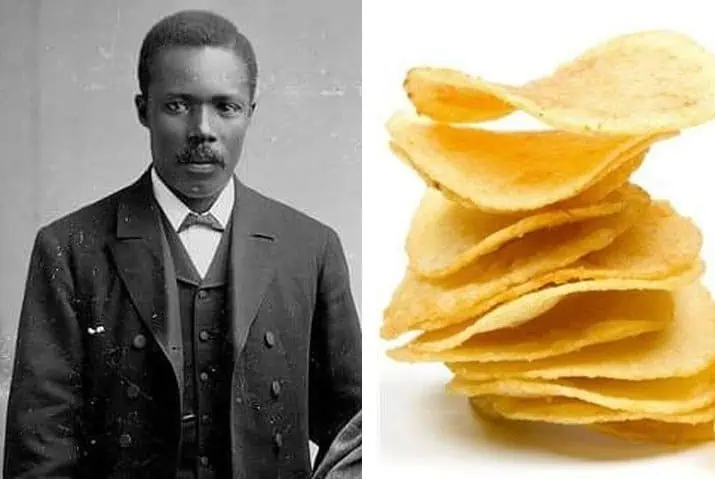
Potato chips are one of the most recognizable snacks in the world. They fill grocery shelves, stadium stands, vending machines, and kitchen cabinets across the globe. Yet few people know the story of George Crum, the Black and Native American chef whose culinary innovation helped shape one of America’s most enduring foods.
His story blends skill, entrepreneurship, and historical myth — and it reveals much about race, labor, and recognition in 19th-century America.
A Skilled Chef in a Segregated Era
George Crum was born George Speck in 1824 in Saratoga County, New York, to a Black father and a Native American mother. In a deeply segregated society that offered limited opportunity to people of color, Crum developed a reputation as a highly skilled cook, hunter, and outdoorsman.
By the mid-1800s, Crum was working at Moon’s Lake House, a prestigious resort restaurant in Saratoga Springs, a popular destination for wealthy vacationers. The establishment attracted politicians, industrialists, and elites from across the Northeast. Crum’s cooking — especially his game dishes and fried potatoes — became central to its appeal.
The Famous Potato Chip Origin Story
According to popular legend, in 1853, a demanding customer repeatedly sent back his fried potatoes, complaining that they were too thick and soggy. Frustrated, Crum allegedly sliced the potatoes paper-thin, fried them until crisp, and seasoned them heavily with salt — expecting the dish to be rejected.
Instead, the customer loved them.
The crispy slices quickly became a sensation, and “Saratoga chips” soon appeared on menus throughout the region.
While historians caution that this story may be partially mythologized, multiple historical accounts confirm that Crum popularized ultra-thin fried potatoes, turning them into a signature dish that spread far beyond Saratoga.
Regardless of the precise origin, Crum’s role in shaping and commercializing the early potato chip is widely recognized.
Building His Own Business
In 1860, Crum opened his own restaurant, Crum’s House, near Saratoga Lake. Unlike most establishments of the era, Crum’s restaurant welcomed wealthy and working-class patrons alike, building a reputation for exceptional food and hospitality.
At each table, Crum reportedly placed baskets of his crispy potato slices — an early form of what would later become mass-market potato chips.
For more than 30 years, Crum’s House thrived, serving visitors from across the country and cementing his reputation as one of the region’s most successful Black entrepreneurs of the 19th century.
Why Crum Didn’t Profit From the Chip Industry
Although Crum popularized the dish, he never patented it. At the time, foods were rarely patented, and large-scale packaging technology had not yet been developed.
It wasn’t until the early 20th century, long after Crum’s death, that entrepreneurs like Herman Lay transformed potato chips into a mass-produced commercial product. By then, the industry had grown into a multibillion-dollar business — without Crum or his family receiving credit or financial benefit.
This pattern — Black innovation followed by white corporate commercialization — was tragically common in American history.
A Legacy Beyond the Snack
George Crum died in 1914 at the age of 90, having lived an unusually long and productive life for his era. Though his name faded from popular memory, his culinary influence never disappeared.
Today, Crum is remembered not only for his role in shaping one of America’s favorite foods, but as a symbol of overlooked Black entrepreneurship, creativity, and resilience during a time of severe racial barriers.
His story reminds us that behind countless everyday products lie forgotten innovators whose contributions shaped American culture — often without recognition.
Why George Crum Still Matters
Potato chips may seem simple. But their origin story reveals deeper truths about labor, race, ownership, and historical memory.
George Crum didn’t just create a snack — he left a mark on American food culture that still echoes more than 170 years later.
And every time a bag of chips is opened, his legacy quietly lives on.
Sharing