When Muhammad Ali Walked Into Iraq to Free American Hostages

When Muhammad Ali Walked Into Iraq to Free American Hostages
In November 1990, as the world braced for war in the Persian Gulf, Muhammad Ali quietly stepped into one of the most dangerous diplomatic missions of his life.
At the time, Saddam Hussein was holding dozens of Western civilians in Iraq and Kuwait, using them as human shields against potential U.S. and allied airstrikes. Among them were Americans, Britons, and other foreign nationals — engineers, teachers, business workers, and families — trapped behind enemy lines as tensions surged toward what would become the Gulf War.
Governments around the world were struggling to negotiate their release. Diplomatic efforts moved slowly, and every passing week increased fears that war would begin before the hostages could be freed.
That’s when Muhammad Ali decided to intervene.
The Hostage Crisis
In August 1990, Iraq invaded Kuwait, triggering immediate international outrage. The United States and its allies responded with economic sanctions and began assembling a massive military coalition in the region.
In retaliation, Saddam Hussein detained hundreds of foreign civilians living in Iraq and Kuwait. Many were placed near military installations, power plants, weapons facilities, and industrial sites — locations likely to be targeted if airstrikes began.
Saddam referred to them as “guests.” The world saw them as hostages.
Television broadcasts showed frightened civilians being paraded on Iraqi state television, forced to thank Saddam for their “hospitality.” Their families watched helplessly, unsure if they would ever see them again.
Why Ali Went
By 1990, Muhammad Ali was no longer the dominant heavyweight champion who once ruled the boxing world. Parkinson’s disease had already begun to limit his speech, weaken his body, and slow his movements.
But his global stature remained unmatched.
Ali had become far more than a boxer. He was a civil rights icon, a religious figure, an outspoken anti-war voice, and one of the most recognizable human beings on Earth. He believed his personal influence could reach places where traditional diplomacy could not.
Working alongside Chicago community activist Yasser Arafat Khalifa, Ali organized a private humanitarian mission to Iraq. The trip was unofficial, not authorized by the U.S. government, and widely considered dangerous. Some U.S. officials quietly discouraged him from going, concerned for his safety and the political complications it could create.
Ali went anyway.
Entering Baghdad
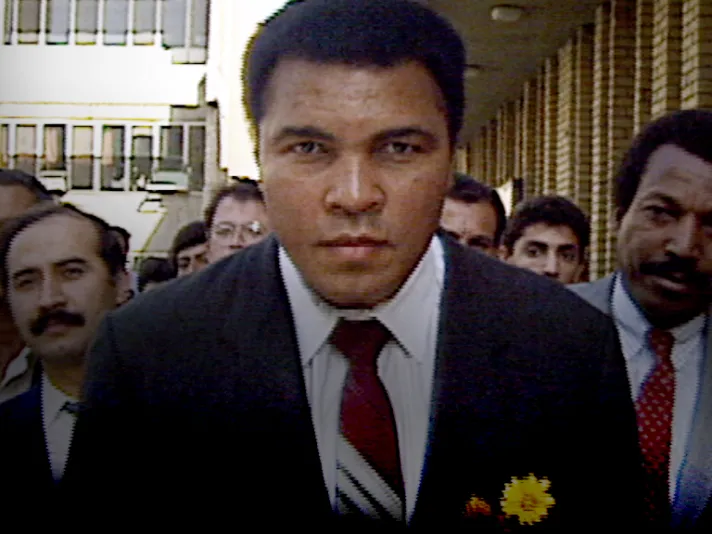
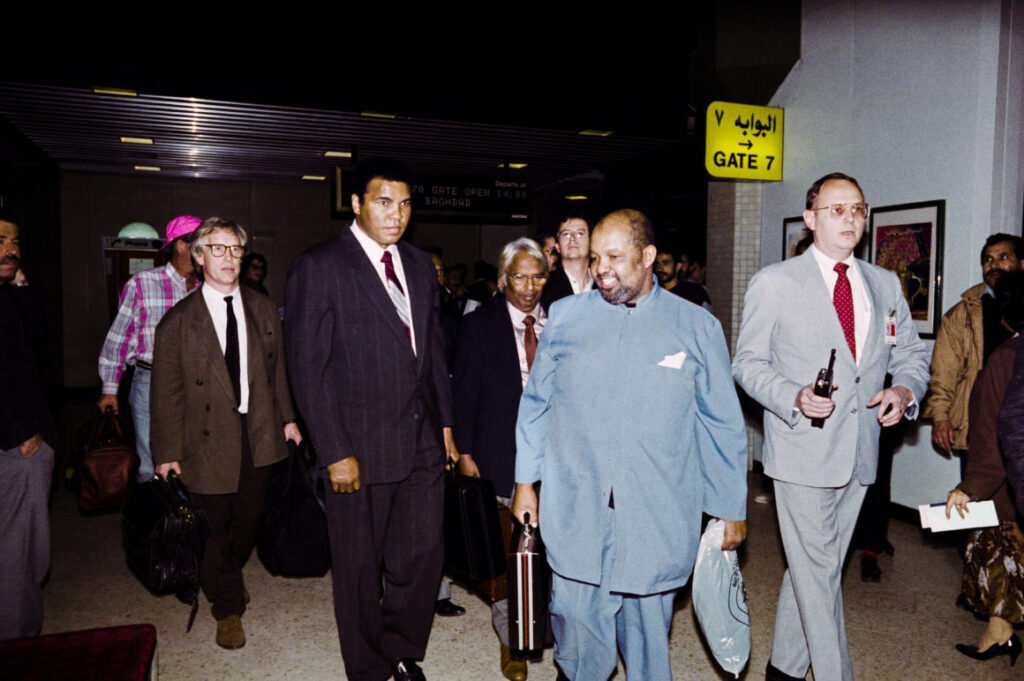
In late November 1990, Muhammad Ali flew into Baghdad, placing himself directly inside hostile territory at one of the most volatile moments in modern Middle Eastern history.
Soon after landing, Ali and his small delegation were taken to meet Saddam Hussein at the presidential palace.
The meeting lasted over an hour.
Ali avoided threats, political demands, or public posturing. Instead, he spoke to Saddam in personal terms, appealing to faith, mercy, family, and compassion. As a fellow Muslim, Ali framed the conversation around humanitarian responsibility and moral accountability. He urged Saddam to release the civilians as a gesture of goodwill that could prevent further suffering.
According to members of the delegation, Ali remained calm, respectful, and persistent throughout the meeting, carefully choosing his words in a tense environment where even small mistakes could carry enormous consequences.
Saddam’s Decision
To the surprise of nearly everyone involved, Saddam Hussein agreed to release a group of hostages.
Within days, Iraqi officials announced that dozens of Western civilians would be freed, including 15 Americans, who would be released directly into Muhammad Ali’s care.
On December 2, 1990, Ali escorted the freed hostages out of Iraq and onto a flight bound for Amman, Jordan. Television cameras captured the emotional scenes as families reunited, many overwhelmed by the reality that they were finally going home.
Several of the former hostages later said they were explicitly told their release was the direct result of Ali’s personal intervention.
Global Reaction
News of Ali’s success spread quickly around the world.
At a time when diplomatic negotiations were failing and war appeared increasingly inevitable, one man had crossed enemy lines and secured the release of innocent civilians.
President George H.W. Bush publicly thanked Ali for his efforts, calling the mission a meaningful humanitarian success. Families of hostages praised him, and newspapers around the world ran headlines celebrating the achievement.
Ali himself downplayed the attention, saying he had simply done what he believed was right.
Controversy and Criticism
Not everyone supported the mission.
Some critics argued that Saddam Hussein used Ali’s visit as propaganda, broadcasting their meeting on Iraqi television to project an image of mercy and reasonableness. Others worried the trip could undermine formal diplomatic efforts or unintentionally legitimize the regime.
Ali understood these concerns but believed saving lives outweighed political optics.
For the families who were reunited, the debate was largely irrelevant. Their loved ones were home.
A Different Kind of Victory
For a man known worldwide for his physical dominance, this mission revealed a different kind of strength.
Ali entered Iraq at a moment when his health was declining and his body was betraying him. Yet he placed himself in personal danger to advocate for people he had never met, in a country hostile to his own, with no guarantee of success.
He didn’t go as a government envoy or political negotiator. He went as a humanitarian, guided by faith and conscience, relying only on the power of persuasion and moral appeal.
Days later, he returned with innocent lives.
The Legacy
Years after the event, several former hostages publicly credited Muhammad Ali with saving their lives. One said simply:
“If Muhammad Ali hadn’t gone, we don’t know if we would’ve ever come home.”
It was one of the most courageous acts of Ali’s later life, yet remains one of the least remembered chapters of his story.
But in that quiet mission, far from stadium lights and championship belts, Muhammad Ali once again demonstrated why his legacy transcends sport.
Not because of how hard he could hit —
but because of how deeply he cared.
Sharing