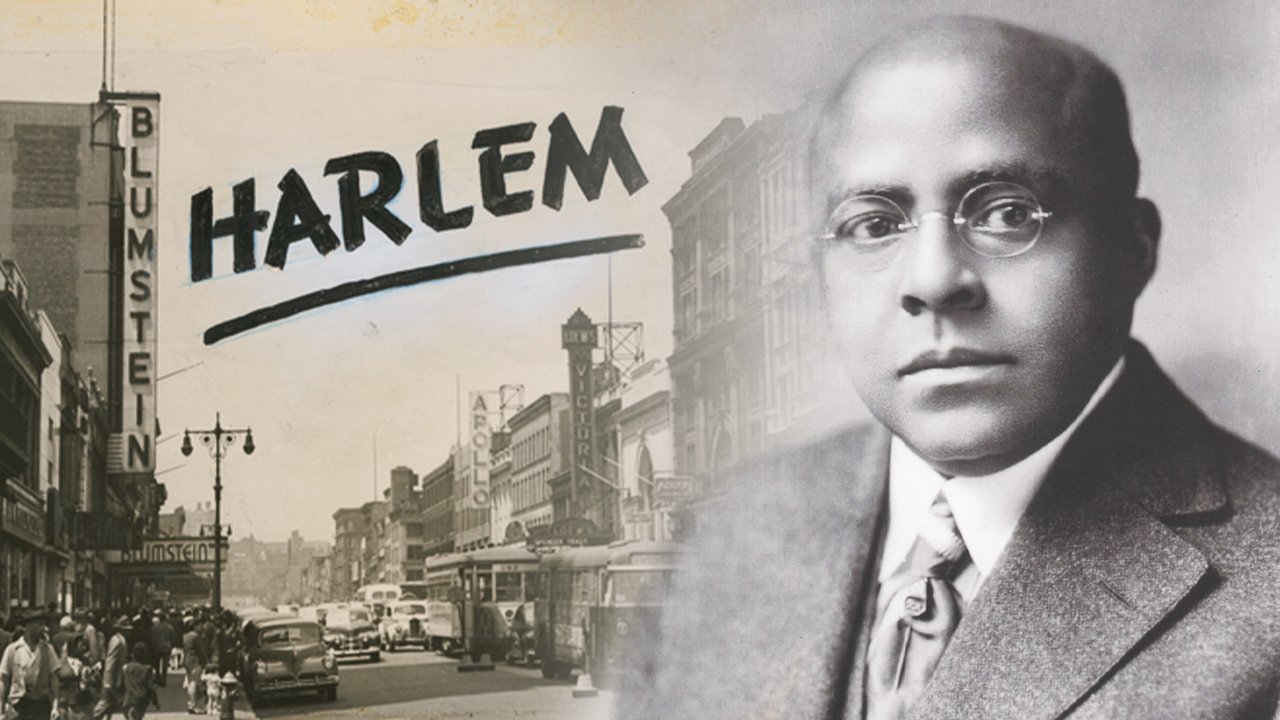
Philip A. Payton Jr. – The Black Real-Estate Strategist Who Helped Flip Harlem’s Color Line

Philip Anthony Payton Jr. (February 27, 1876 – August 29, 1917) was a Black real-estate entrepreneur best known for building (and aggressively defending) a business model that moved Black New Yorkers into Harlem at the exact moment white landlords were panicking over vacancies—and over Black tenants.
Later writers often nicknamed him the “Father of Harlem,” but modern scholarship and even older local histories caution that Harlem’s transformation had many architects, Payton simply being one of the most visible and consequential.
What makes Payton historically interesting isn’t just that he was “successful.” It’s how he used the economics of segregation—vacant buildings, white owners refusing Black tenants, Black families trapped in overcrowded Midtown districts—to carve out leverage, then used that leverage to push a neighborhood boundary north block by block.
Early life in Westfield, Massachusetts (1876–1899)
Payton was born in Westfield, Massachusetts, in 1876. His parents worked in personal services—his father as a barber and his mother as a hairdresser—and he learned the trade early. He attended Livingstone College in North Carolina and finished there in 1899, then headed to New York City the same year.
New York didn’t hand him a welcome basket. He cycled through working-class jobs (including barbering and building work) before landing in a real-estate office—an entry point that mattered because it let him watch the machinery of rent, leases, management, and commissions up close.
The New York housing trap Payton walked into
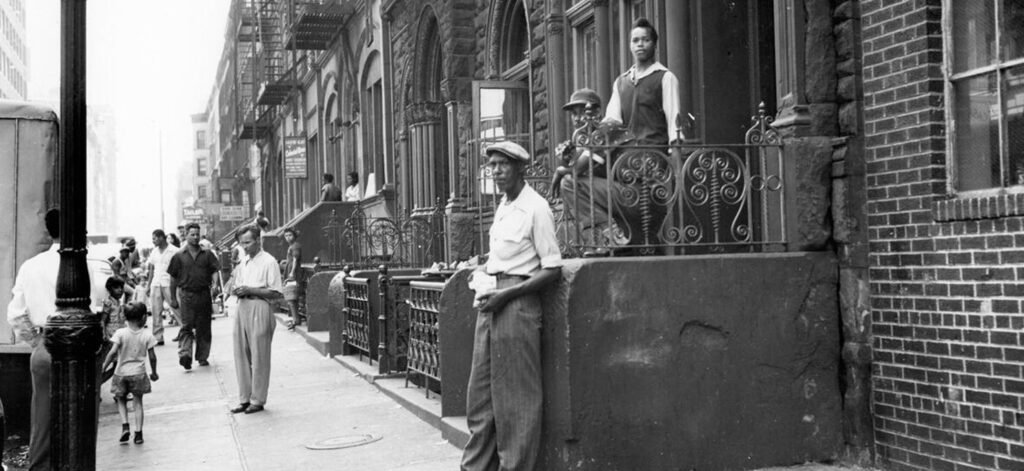
Around 1900, Black New Yorkers were heavily concentrated in parts of Midtown Manhattan because discrimination narrowed where they could live. Overcrowding and poor conditions were common, and racial violence was a real threat. At the same time, Harlem—newly developed with brownstones and “flats”—was still largely white, and sections of it were struggling with vacancies and financial pressure on landlords. That mismatch (Black demand + white vacancy + racist gatekeeping) is the crack Payton pushed a crowbar into.
First businesses: from tiny office to Harlem’s front line (1900–1903)
In 1900, Payton formed a small real-estate partnership (often referenced as Brown and Payton). The firm struggled and the partnership dissolved, but Payton kept working in real estate on his own.
By the early 1900s he was connecting Black tenants—who had money but few legal options—to white property owners uptown—who had buildings but didn’t want Black tenants (until vacancies started hurting). Payton’s advantage was that he was willing to do the “dirty” middle work: management, leasing, tenant placement, and the reputation risks that white brokers didn’t want.
He and his wife Maggie bought a home at 13 West 131st Street (an address that later became a symbol in retellings of his rise), signaling he wasn’t only placing tenants in Harlem—he was planting his own life there too.
The Afro-American Realty Company: turning segregation into a business weapon (1903/1904–1908)
Founding and purpose
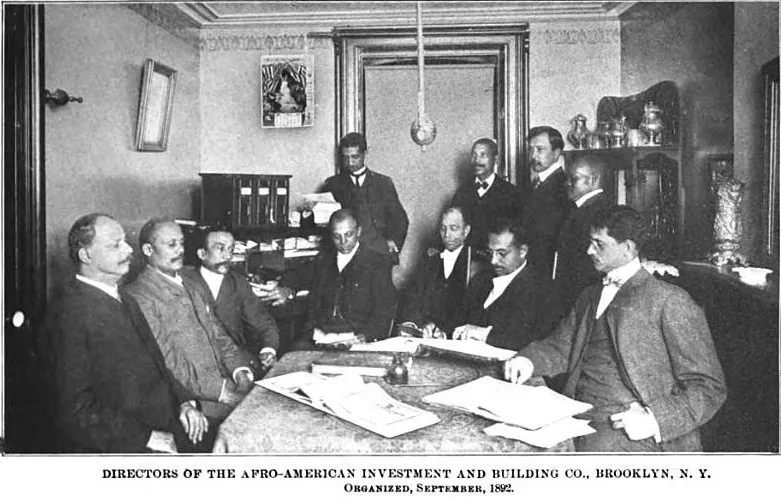
Sources commonly describe Payton forming an Afro-American Realty partnership in 1903 and incorporating/chartering the company in 1904.
The core plan was straightforward and audacious:
- Lease and buy Harlem properties (often from white owners under vacancy pressure),
- Fill them with Black tenants,
- Use the cashflow and appreciation to expand,
- Market the company to Black investors as both profit-making and race-uplift.
A key—and often quoted—idea associated with Payton’s pitch was that prejudice could be converted into profit because racist refusals created artificial scarcity, letting whoever could open housing claim the demand. (Different sources preserve different exact phrasings, but the concept is consistent across accounts.)
The 1905 “real estate race war”
In 1905, a white realty company (often identified in coverage as Hudson Realty/Hudson River Realty) attempted to reassert a white-only block on West 135th Street by evicting Black tenants from buildings it controlled and replacing them with white tenants. Afro-American Realty retaliated by buying nearby buildings, evicting white tenants, and moving the displaced Black families in—forcing a direct, public confrontation over who Harlem was “for.” Contemporary press called it a “Real Estate Race War.”
This wasn’t just dramatic—it was strategic. If a white owner could “flip” a building back to white tenants, Payton’s expansion model collapses. If Payton could hold the line on a contested block, it signaled to the market that Black tenancy in Harlem was not a temporary accident—it was the new reality.
Growth, backlash, and court collapse
Afro-American Realty expanded fast, financing deals, managing buildings, and selling stock. But expansion created vulnerability: investor expectations, debt, and claims about holdings. In 1906, stockholders filed suit alleging the prospectus overstated assets and failed to adequately disclose encumbrances (like mortgages). The company issued a dividend in 1907, but the legal action and the broader financial downturn around 1907–08 hit confidence hard. A court ultimately found misrepresentations and ordered remedies; the company effectively stopped operating in 1908.
One detail that matters for understanding Payton as a human rather than a statue: he sought outside money to stabilize the business, including appeals that ran through (and then around) Booker T. Washington toward Andrew Carnegie—but he was turned down.
After Afro-American: the “PAP” company and Harlem’s accelerating shift (1908–1917)
Payton didn’t exit the stage after the lawsuit. He continued in Harlem real estate under the Philip A. Payton Jr. Company—known for signage bearing a “PAP” logo—and he remained a figure newspapers consulted on Harlem housing issues.
He also leaned into symbolic branding: naming buildings to honor major Black figures (examples documented include names like Attucks, Toussaint, and Wheatley in advertising). The point wasn’t just pride; it was marketing—turning a set of apartments into a statement about community permanence.
The “last big deal” (July 1917)
In July 1917, Payton closed what was described as a major transaction involving six apartment houses for about $1.5 million, and the buildings were associated with names honoring prominent Black figures (including Crispus Attucks, Toussaint L’Ouverture, Phyllis Wheatley, Paul Laurence Dunbar, Frederick Douglass, and Booker T. Washington).
Death and what survived him (August 29, 1917—and beyond)
Payton died of liver cancer on August 29, 1917, at his summer home in Allenhurst, New Jersey.
Accounts note his funeral was held at St. Mark’s Methodist Episcopal Church in Manhattan, and that he was survived by his wife Maggie and his sister (often identified as Susan Payton Wortham). The business name continued after his death; sources differ on exactly how long and under whom, but documentation indicates operations persisted beyond 1917.
Sharing
Tags